Forget the glossy brochures and surface-level tours that show you a city but never let you feel it. To truly understand Seoul, you must immerse yourself in its living culture, the hidden alleyways where tradition breathes, the markets humming with generational knowledge, and the neighborhoods where locals build community. This guide is built to take you far beyond the standard tourist trail, offering a curated selection of immersive, off-the-beaten-path experiences that reveal the city's authentic rhythms.
This is not just another list of things to do in Seoul; it's a practical blueprint for meaningful connection. We've gathered insights from local residents, artists, and entrepreneurs to provide actionable advice on navigating these spaces respectfully. You won't just visit a market; you'll learn the unwritten rules of ordering from an ajumma's food stall and understand the cultural significance behind a pre-dawn fish auction. You won't just walk through a neighborhood; you'll discover its hidden tea houses and underground art scenes.
We will cover a diverse range of activities organized by theme, from Jongno-gu's craft bar culture and Gwangjang Market's culinary traditions to Itaewon's transnational subcultures and Hongdae's independent artist networks. Each recommendation is designed to be an invitation to see the city through the eyes of those who call it home. The goal is to move beyond passive observation and engage directly with the dynamic, complex, and vibrant pulse of modern Seoul, ensuring your visit is both memorable and culturally aware.
1. Jongno-gu's Hidden Speakeasy & Craft Bar Scene
Venture beyond the neon glow of Gangnam and discover an intimate, craft-focused nightlife experience in Seoul’s historic heart. The Jongno-gu district, particularly around Anguk Station and the traditional Bukchon Hanok Village, is the epicenter of a thriving speakeasy scene. This isn't about flashy clubs; it's a celebration of mixology as an art form, hidden behind unmarked doors, within converted hanok courtyards, and in quiet basements. This is one of the most rewarding things to do in Seoul for an authentic, locals-only evening.
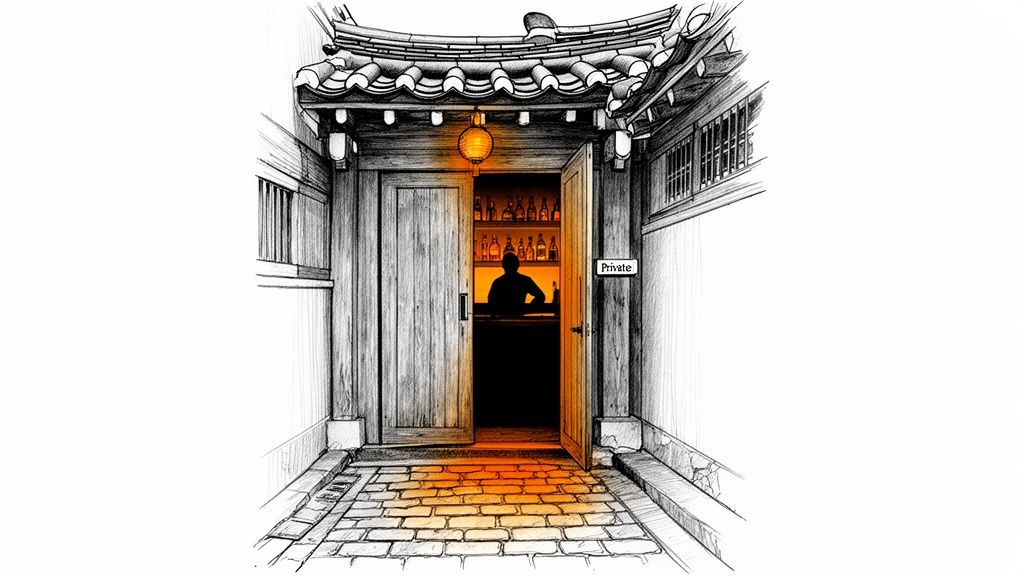
Unlike nightlife in other parts of the city, Jongno’s bars prioritize seasonal Korean ingredients and quiet conversation. Finding them is part of the adventure, often requiring a bit of digital sleuthing or a friendly tip from a local. The reward is a bespoke cocktail and a glimpse into a sophisticated subculture that values craftsmanship over spectacle.
Navigating the Scene: A Local Guide
To successfully immerse yourself in this underground culture, preparation and etiquette are key. These bars are small and built on a foundation of mutual respect between the bartender and patron.
- Scout Locations: Check local-run Instagram accounts like @jongno.bars or ask your hotel concierge for up-to-date recommendations, as locations can be transient.
- Time Your Visit: Go on a weekday (Tuesday or Wednesday) to avoid crowds. Arrive after 10 PM when the local post-dinner crowd filters in for a more authentic atmosphere.
- Respect the Space: These are not places for loud groups. The culture is one of "quiet conversation only." Keep your voice low and your group small.
- Be Patient: Allow yourself a good 30-45 minutes to find the entrance on your first attempt. It's often an unmarked door in a residential alley.
- Cash is King: While some places are modernizing, many smaller, owner-operated speakeasies still prefer or only accept cash.
2. Gwangjang Market's Ajumma-Led Tteokbokki & Bindaetteok Stalls
Step into Seoul's oldest continuously operating market, established in 1905, for an unfiltered culinary education. Gwangjang Market is not just a place to eat; it's a living museum where veteran vendors (ajummas), some in their 70s, share generational recipes from bustling stalls. The experience is about more than just food; it involves perching on a stool, observing informal eating protocols, and learning to recognize the quality markers that locals trust. This is one of the most essential things to do in Seoul for an authentic taste of its culinary soul.
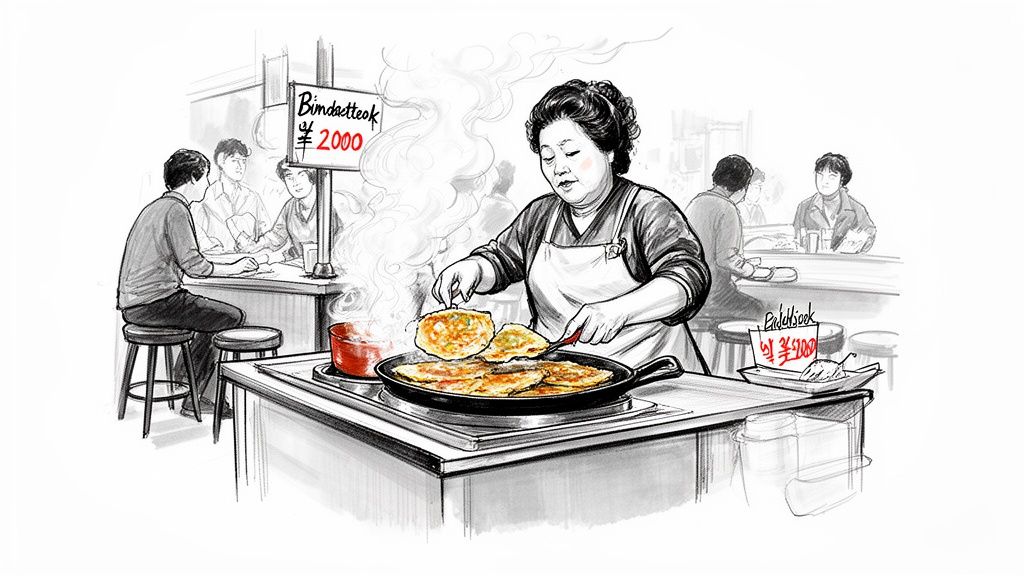
Unlike a formal restaurant, the market's charm lies in its direct interaction and organized chaos. Here, food is a conversation. By watching transactions and engaging with vendors, you participate in a tradition celebrated by food personalities like Maangchi and countless Korean documentaries that honor these women as "living food heritage." The key is to embrace the experience of eating shoulder-to-shoulder with locals, guided by the masters themselves.
Navigating the Scene: A Local Guide
To get the most out of your visit, approach it with observation and respect. Understanding the market's rhythm and etiquette will transform your meal from a simple transaction into a memorable cultural exchange.
- Time Your Visit: Arrive during off-peak hours, either mid-morning (10-11 AM) or mid-afternoon (2-3 PM). This allows you to observe the vendors' prep rhythm without the lunch rush.
- Identify Quality: Look for stalls with the longest lines of local customers. This is the most reliable indicator of quality and authenticity.
- Learn Before Ordering: Take a moment to watch two or three other people order. This helps you understand portion sizes and ordering cues.
- Start Simple: If you're new to the scene, begin with bindaetteok (mung bean pancakes). It's a beloved, accessible staple with high local relevance.
- Ask for Recommendations: A simple phrase like "오늘 뭐가 좋아요?" (Oneul mwo-ga joh-ayo? / What's good today?) can unlock daily specials or the vendor's proudest dish.
- Prepare for Payments: Many stalls are cash-only. Bring enough Korean Won to cover your meal and avoid payment issues.
3. Seochon Neighborhood Walking Route & Tea House Deep Dive
Escape the palace crowds and step into a living museum of early 20th-century Seoul in the Seochon neighborhood. Nestled just west of Gyeongbokgung Palace, this preserved residential area is a labyrinth of narrow alleys, low-rise hanok homes, and independent artisan workshops. Unlike manicured tourist villages, Seochon is a genuine neighborhood where locals live, work, and uphold community traditions, offering one of the most authentic things to do in Seoul for culturally curious travelers.
The experience here isn't about checking off sights; it's about slowing down to observe how modern life integrates with historical architecture. The real magic lies in its traditional tea houses, many of which have been run by the same families for generations. A visit offers not just a cup of tea, but a meditative practice and a direct connection to the area's living history.
Navigating the Scene: A Local Guide
To respectfully explore this residential enclave, a slow and observant approach is essential. This is not a place to rush through but to absorb at a leisurely pace, with a focus on meaningful interaction.
- Scout Locations: Start at Gyeongbokgung Palace's west exit and wander counterclockwise. Prioritize 3-4 specific tea houses rather than trying to see the entire neighborhood.
- Time Your Visit: Go on a weekday morning (Tuesday-Thursday, 10 AM-12 PM) when the alleys are quiet and residents are more open.
- Respect the Space: Remember this is a real neighborhood. The culture is one of "quiet observation." Keep your voice low and be mindful of private residences.
- Be Patient: Sit in a tea house for at least one hour. The tea ceremony is a meditation, not a quick transaction. Ask the owners about their family’s history in Seochon; many are unofficial local historians.
- Practical Prep: Wear comfortable walking shoes, as the stone paths and stairs are often uneven. Many smaller, family-run establishments may prefer cash.
4. Noryangjin Fish Market's Pre-Dawn Auction & Sashimi Counter Culture
Experience the raw, high-energy pulse of Seoul's food supply chain at the Noryangjin Fisheries Wholesale Market. While many tourists visit the 24-hour retail section for a sashimi meal, the real cultural immersion happens before dawn. The professional fish auction, a chaotic symphony of shouting auctioneers and bidders, offers a rare glimpse into the city's culinary backbone, revealing how the freshest seafood gets from the port to the city's top restaurants.
This dual experience, witnessing the auction and then eating sashimi prepared from fish purchased moments later, is one of the most unforgettable things to do in Seoul for food-focused travelers. It connects you directly to the source, offering a level of freshness and an understanding of local commerce that standard restaurant dining cannot match.
Navigating the Scene: A Local Guide
The market is vast, wet, and operates on a strict professional schedule. To get the most out of your pre-dawn visit, planning and practicality are essential.
- Scout Locations: The auction takes place in the new building's lower level. Consider hiring a local guide (approx. ₩80,000) for your first visit to safely navigate the restricted areas and gain cultural context.
- Time Your Visit: Arrive no later than 5:45 AM. The main auction activity is most intense between 5:30 AM and 6:30 AM before it quickly winds down.
- Respect the Space: This is a working wholesale market. Wear non-slip, closed-toe shoes and older clothes, as you will encounter fish blood and water. Stay on the designated walkways and do not interfere with the workers.
- Be Patient: After the auction, head to the retail section. Pointing at the fish you want in the tanks is the easiest, language-neutral way to make a purchase.
- Cash is King: Bring at least ₩50,000 in cash. While some larger vendors accept cards, many smaller stalls and the restaurants that prepare your fish operate primarily with cash. ATMs are scarce.
5. Itaewon's Transnational Subcultures & Hidden Queer Spaces
Step away from the mainstream to explore Itaewon, Seoul’s historic hub of transnational communities and a vital safe space for the LGBTQ+ community. Shaped by its proximity to the U.S. military base since the 1950s, this neighborhood is a mosaic of immigrant enclaves, a discreet gay nightlife district, independent record shops, and underground music venues. Experiencing its layers offers one of the most unique and culturally rich things to do in Seoul.
Unlike more polished districts, Itaewon thrives on its authentic, overlapping identities. You can explore a Bangladeshi neighborhood, discover vintage boutiques run by the same owner for decades, and eat at family-owned restaurants where recipes have been passed down for generations. It’s a place built on stories, resilience, and community, offering a raw and genuine look at the city’s diverse fabric.
Navigating the Scene: A Local Guide
To truly connect with Itaewon's multifaceted culture, respectful observation and genuine interaction are essential. This isn't a curated tourist attraction; it’s a living, breathing community.
- Observe Community Rituals: Visit ethnic enclaves like the Bangladeshi area during meal prep hours (11 AM-12 PM or 5-6 PM) to witness daily life unfold organically.
- Support Local Institutions: Eat at family-run immigrant restaurants during lunch hours when locals outnumber tourists. Pop into independent record shops and ask the owners about their stories.
- Time Your Visit: For a more local vibe, explore on a weekday evening (Tuesday-Thursday, 7-10 PM). Avoid the overwhelming tourist crowds on Friday and Saturday nights.
- Find Queer Spaces Safely: The LGBTQ+ scene is fluid. Check current online queer forums or ask trusted local contacts for up-to-date recommendations on safe and welcoming venues.
- Photograph with Respect: This is a neighborhood, not a photo set. Always ask permission before taking pictures of individuals or private cultural moments to honor their space.
6. Namdaemun Market's Fabric, Textiles & Sewing Culture
Step away from the mainstream souvenirs and into the vibrant heart of Seoul’s garment-making tradition at Namdaemun Market. The sprawling textile wings of this historic market are a living museum, preserving the city's pre-industrial wholesale fabric economy. This is not just a shopping destination; it is a cultural deep dive where professional tailors, hanbok artisans, and generations of Korean ajummas (middle-aged women) source their materials. Exploring this area is one of the most unique things to do in Seoul for a look into the city's creative soul.
Unlike typical tourist markets, this section of Namdaemun is a functional, working hub. The real experience lies in observing the interactions, the seasonal fabric traditions, and the powerful role of women in this economic sphere. Engaging with the vendors, many of whom are informal historians of Korean garment-making, provides a rich, unfiltered glimpse into a craft culture that has dressed the city for centuries.
Navigating the Scene: A Local Guide
To truly appreciate the textile district, go with a sense of purpose and respect for the vendors' expertise. This is a place of business, and approaching it correctly will unlock a rewarding cultural exchange.
- Time Your Visit: Arrive on a weekday morning (Tuesday to Thursday, 9-11 AM) when vendors are setting up but are not yet overwhelmed.
- Have a Goal: Come with a specific project in mind (e.g., fabric for a scarf or dress material). If just observing, spend 30 minutes watching the flow before engaging.
- Learn the Lingo: Knowing a few basic words helps immensely: 면 (myeon-cotton), 비단 (bidan-silk), and 린넨 (rinnen-linen).
- Engage Respectfully: Ask vendors about their business history. Many have stories that span generations and offer incredible insight into Seoul's past.
- Seek Specialists: If interested in traditional Korean clothing, look for dedicated hanbok fabric stalls. They often provide repair or modification advice.
- Bring Cash: Many of these legacy stalls are cash-only, so come prepared with Korean Won.
7. Apgujeong Rodeo Street's Korean Fashion Industry Observation
Look beyond the high-end boutiques and see Apgujeong Rodeo Street for what it truly is: the nerve center of the Korean fashion industry. This is where designers launch collections, global luxury brands establish their Asia-Pacific flagships, and the ecosystem of stylists, editors, and photographers conduct their daily work. Observing the street is one of the most unique things to do in Seoul for a behind-the-scenes look at how the K-fashion aesthetic is produced, distributed, and constantly refined.
Unlike simple shopping, this is an exercise in cultural observation. The street reveals the industry's inner workings, from trend forecasting visible in window displays to the professional interactions happening in real-time. It’s a chance to witness the creative process that fuels a global phenomenon, from minimalist pioneers like Yoon to experimental tailors like Juun.J. This offers a much deeper appreciation than just buying a piece of clothing.
Navigating the Scene: A Local Guide
To transform a shopping trip into an industry study, approach your visit with a specific strategy and a curious mindset. The goal is to see the process, not just the product.
- Time Your Visit: Go on a weekday morning (Tuesday-Thursday, 10 AM - 12 PM). This is when industry professionals are actively working and retail staff are more available for conversation.
- Research First: Familiarize yourself with a few Korean designers beforehand. Visiting a flagship and asking staff about the design philosophy or seasonal inspiration opens up insightful dialogue.
- Track Events: Follow Korean fashion media on Instagram for announcements about pop-up exhibitions and seasonal trunk shows, which are often open to the public.
- Respect the Professionals: This is a working environment. Be discreet when observing and avoid interrupting business meetings or photoshoots. The culture is one of focused creativity.
- Document Trends: Photographing store window displays is a great way to track evolving trends. They change seasonally and act as a visual guide to the industry's creative direction.
8. Hongdae's Underground Art Galleries & Artist Residency Networks
Move past the mainstream K-pop energy of Hongdae to uncover the true creative engine of the neighborhood: a deeply rooted network of underground art galleries and artist-run spaces. Centered around Hongik University, this district is more than just a nightlife hub; it's a living ecosystem where contemporary Korean artists operate outside of large institutional frameworks. Here, creativity thrives in basement performance venues, independent printmaking studios, and cooperative artist residencies.
Exploring this scene offers an unparalleled glimpse into the grassroots of Seoul's art world. You'll find experimental exhibitions that challenge convention and spaces prioritizing community and artistic dialogue over commercial success. This is one of the most authentic things to do in Seoul for anyone wanting to connect with the city’s contemporary creative pulse and engage directly with the artists shaping it.
Navigating the Scene: A Local Guide
Tapping into this independent network requires a bit of digital groundwork and a willingness to explore. The experience is about discovery and genuine interaction, not just observation.
- Scout Locations: Follow Instagram accounts like @hongdae.art or @seoulartstage for crowdsourced maps and event announcements, as these small venues are often transient.
- Time Your Visit: Studio open hours are typically limited to evenings (6-9 PM) or weekend afternoons (1-5 PM). Check for monthly art walks, often held on the first weekend of the month.
- Engage Respectfully: Ask artists about their work and techniques. Many view sharing their process as a cultural responsibility, creating a space for genuine connection.
- Book Workshops Locally: For hands-on experiences like ceramics or printmaking, use Korean platforms like Naver for authentic, local-led classes rather than tourist-focused sites.
- Participate in Zine Fairs: Keep an eye out for quarterly artist-run zine fairs and art markets. These events offer high community energy with low commercial pressure, perfect for seeing raw creativity.
9. Cheonggyecheon Stream's Environmental Restoration & Evening Ritual Culture
Discover a living symbol of Seoul's environmental rebirth and a vital social artery flowing through its urban core. The Cheonggyecheon Stream, a 10.8km waterway once buried under a highway, was famously restored in 2005. It’s more than just a scenic walk; it’s a profound testament to urban renewal and a beloved public space where you can witness the daily rituals of Seoulites. Observing the evening culture here is one of the most unique things to do in Seoul to understand the city's connection to nature.
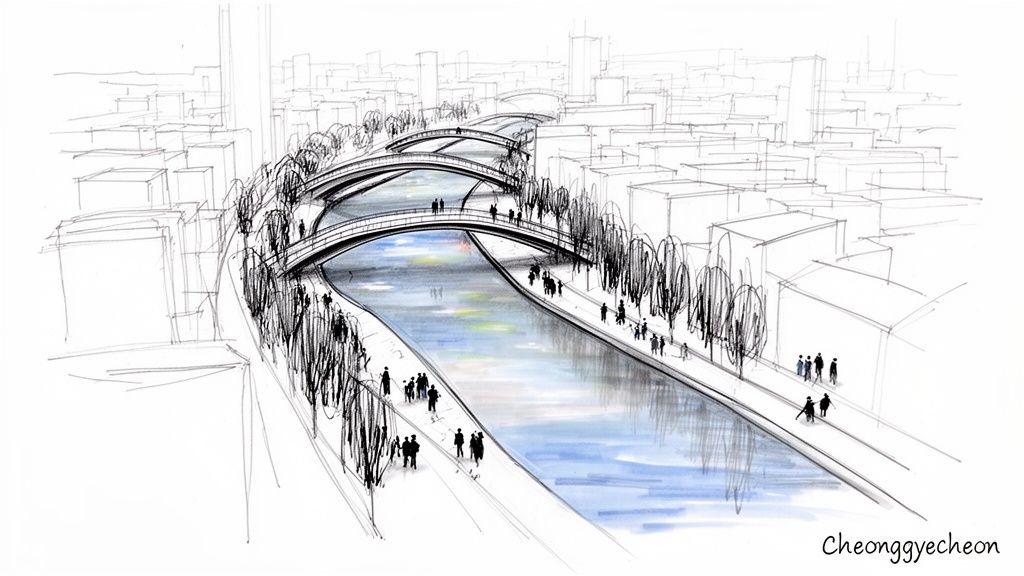
This restored stream acts as a connector between diverse neighborhoods, offering a serene escape below the bustling streets. The real magic happens as the sun sets, when office workers, couples, and families descend to the stream's banks to unwind. This isn't a planned event; it's an organic, daily ritual that provides a fascinating glimpse into the social fabric and rhythms of local life.
Navigating the Scene: A Local Guide
To fully appreciate the stream's cultural significance, you need to treat it as a destination, not just a pathway. Understanding its social geography and timing is crucial for an authentic experience.
- Time Your Visit: Arrive after 7 PM on a weekday (Tuesday to Thursday) for the best local atmosphere with fewer tourists. Visit from May to September for pleasant weather and optimal water levels.
- Segment Your Walk: The stream's character changes by neighborhood. The Jongno section near Gwanghwamun attracts an older crowd, while the Jung-gu portions are popular with young couples.
- Observe Social Rhythms: Witness the city's heartbeat through its daily users. Look for elderly residents practicing tai chi at dawn (6-7 AM), office workers taking a lunchtime stroll (12-1 PM), and couples enjoying the cool evening air (8-10 PM).
- Dress Appropriately: Plan for a 1.5 to 2-hour walk to explore a 3-4km section. Comfortable walking shoes are essential.
- Integrate with Surroundings: Use the stream as a guide. It connects major districts and markets, allowing you to seamlessly transition from a peaceful walk to dinner in a nearby neighborhood.
10. Gangnam Station's Subway Culture & Rush Hour Observation
Experience one of the most uniquely intense things to do in Seoul by treating Gangnam Station not as a transit point, but as a living sociological exhibit. As the world's busiest subway interchange, it serves as a temporal threshold between home and office for millions, offering an unfiltered view into Seoul's demanding work culture, unspoken social codes, and the sheer scale of urban life. This isn't about sightseeing; it’s about observing the city’s rhythm from its very heart.
Here, you can witness the choreographed chaos of the morning rush, the brief respite of a lunchtime surge, and the weary exodus in the evening. The station’s architecture, flow patterns, and the subtle shifts in commuter behavior reveal powerful narratives about efficiency, conformity, and endurance in modern Korean society. It’s an immersive cultural lesson found in the daily grind.
Navigating the Scene: A Local Guide
To transform this commute into a cultural observation, a specific, respectful approach is required. You are an observer in a high-stress environment, so blending in is crucial.
- Experience Rush Hour: Intentionally visit between 7:30-8:30 AM or 6:00-7:00 PM for the full, authentic intensity. Position yourself near an exit or on an observation platform.
- Time Your Navigation: Attempt to walk from one end of the station to the other. Timing this journey provides a physical sense of the station's immense scale and infrastructure.
- Respect Privacy: Do not take photos or videos of individuals. Focus your observations on architectural flow, crowd patterns, and behavioral sequences instead.
- Observe Demographic Shifts: Visit one of the station's many convenience stores during peak hours (7 AM, 12 PM, 6 PM) to see how the customer base changes, from hurried office workers to late-night students.
- Engage Cautiously: Morning commuters are focused and exhausted. If you wish to speak with someone, the lunch break or early evening offers a slightly more relaxed window for brief, polite interactions.
11. Practical Travel Tips for Authentic, Local Seoul Experiences
To truly unlock the city’s soul, you need more than a map; you need a mindset. Engaging with Seoul on a local level means stepping away from tourist-centric behaviors and adopting practices that foster genuine connection. This approach transforms a standard vacation into an immersive cultural deep-dive, turning simple activities like market visits or evening drinks into memorable, authentic experiences. This is one of the most crucial things to do in Seoul to ensure your trip is respectful, smooth, and deeply rewarding.
This philosophy is about preparation and observation. It’s about understanding that many of the city’s best spots, from tiny market stalls to hidden tea houses, operate on a different rhythm. By anticipating local norms around cash, communication, and timing, you bypass common frustrations and open doors to interactions that most visitors miss.
Navigating Like a Local
Adopting a few key habits will fundamentally change how you experience Seoul's neighborhoods, markets, and cultural spaces. These tips are built on respect and practical awareness.
- Time Your Outings: Visit popular neighborhoods like Seochon or Ikseon-dong on a weekday morning. For nightlife or dining, Tuesday through Thursday evenings offer a more relaxed, local atmosphere than crowded weekends.
- Cash is Still Crucial: Many traditional markets, independent shops, and older, owner-operated restaurants are cash-only. Always carry a sufficient amount of Korean Won to avoid issues.
- Bridge the Language Gap: Use a translation app with image-to-text functionality for menus. Having a screenshot of your destination's name in Korean is invaluable for taxi drivers or asking for directions.
- Observe Before Acting: Before ordering at a busy food stall, watch how a few locals do it. This helps you understand the ordering and payment flow without causing delays.
- Dress Appropriately: Comfortable, slip-resistant shoes are essential for navigating wet market floors and uneven stone alleyways. For your electronics, you'll need the right equipment too. Learn more about the power adapter for Korea to stay charged.
- Practice Respectful Photography: Always ask for permission before taking close-up photos of people or their products. In quiet spaces like temples, tea houses, and speakeasies, be discreet and avoid using flash.
12. Cultural Context & Ethical Considerations when Observing Seoul
To truly experience Seoul beyond its surface-level attractions, a visitor must engage with the city thoughtfully and ethically. This means moving from a consumer mindset to one of a respectful observer, understanding the nuances of social dynamics, preservation struggles, and local etiquette. This approach transforms a simple trip into a profound cultural exchange, making it one of the most meaningful things to do in Seoul.
This involves being aware of the tension between development and heritage in neighborhoods like Ikseon-dong, or the quiet reverence required when visiting residential areas like Bukchon Hanok Village. It’s about understanding that while Seoul is a hyper-modern metropolis, its cultural fabric is woven with deep-seated Confucian values that influence everything from social interactions to personal space. Engaging with this context elevates your journey from a checklist of sights to a genuine connection with the city’s soul.
Navigating Seoul with Cultural Fluency
Adopting a mindset of conscious tourism will unlock a deeper, more authentic layer of Seoul. It’s about observing, listening, and adapting with respect for the local culture. For more insights on navigating cultural norms across the continent, explore these guides to the best Asian countries to visit.
- Mind Residential Spaces: When exploring areas like Bukchon or Seochon, remember these are real homes. Keep your voice down, avoid peering into private courtyards, and never photograph residents without explicit permission.
- Observe Social Hierarchies: Age and seniority are deeply respected. When interacting with elders, use two hands to pass or receive items (like cash or a card) and offer a slight bow as a sign of respect.
- Understand "Jeong" (정): This untranslatable concept signifies a deep, emotional connection or bond. You may experience it through the kindness of a market vendor or the warmth of a guesthouse owner. Acknowledge it with genuine gratitude.
- Support Local Preservation: When choosing cafes or shops in historic districts, favor businesses that are thoughtfully integrated into traditional hanok rather than those that have completely demolished the original structure. Your spending choices matter.
- Be Patient with Language: While many younger Koreans speak English, do not assume it. Learning basic Korean phrases like "Annyeonghaseyo" (hello) and "Kamsahamnida" (thank you) is a simple yet powerful gesture of respect.
12-Point Comparison of Seoul Experiences
| Experience | 🔄 Implementation Complexity | 💡 Resource Requirements | ⭐ Expected Outcomes | 📊 Ideal Use Cases | ⚡ Key Advantages |
|---|---|---|---|---|---|
| Jongno-gu's Hidden Speakeasy & Craft Bar Scene | 🔄 High — discovery + social access required (word-of-mouth) | 💡 Moderate — local contacts, cash, basic Korean, late-night availability | ⭐⭐⭐ High authenticity; intimate craft cocktails & bartender dialogue | 📊 Nighttime cultural immersion; craft cocktail study; architecture + social rituals | ⚡ Personalized service; affordable craft drinks; preserves hanok bar culture |
| Gwangjang Market's Ajumma-Led Tteokbokki & Bindaetteok Stalls | 🔄 Medium — crowded navigation; observational learning needed | 💡 Low — small budget, cash, basic Korean phrasebook/translator | ⭐⭐⭐ Very high local authenticity; live prep and generational knowledge transfer | 📊 Street-food ethnography; budget dining; culinary education | ⚡ Extremely affordable; direct vendor teaching; visible food traditions |
| Seochon Neighborhood Walking Route & Tea House Deep Dive | 🔄 Low–Medium — requires time, walking, cultural sensitivity | 💡 Moderate — comfortable shoes, time, patience, some Korean | ⭐⭐⭐ High depth of place-based cultural insight; slow tea rituals | 📊 Architectural/heritage observation; contemplative cultural study | ⚡ Low tourist density; genuine resident interactions; preserved neighborhood feel |
| Noryangjin Fish Market's Pre-Dawn Auction & Sashimi Counter Culture | 🔄 High — early hours, chaotic auction environment | 💡 High — recommended guide, non-slip shoes, cash, physical stamina | ⭐⭐⭐ High educational value; real-time supply-chain visibility; freshest seafood | 📊 Seafood sourcing research; culinary provenance study; early-morning fieldwork | ⚡ Direct traceability; affordable premium sashimi; market-level transparency |
| Itaewon's Transnational Subcultures & Hidden Queer Spaces | 🔄 Medium — rotating venues, insider knowledge for safe access | 💡 Moderate — nighttime visits, local recommendations, cultural sensitivity | ⭐⭐⭐ Strong exposure to multicultural and queer communities | 📊 Multiculturalism & LGBTQ+ community observation; ethnic food research | ⚡ Diverse food offerings; rare visible pluralism; active queer social networks |
| Namdaemun Market's Fabric, Textiles & Sewing Culture | 🔄 Medium — wholesale norms and trade language needed | 💡 Moderate — cash, clear project list, Korean fabric vocabulary | ⭐⭐ High practical value for textile sourcing and craft knowledge | 📊 Garment projects, hanbok commissioning, textile research | ⚡ Wholesale pricing; vendor relationships; intergenerational craft expertise |
| Apgujeong Rodeo Street's Korean Fashion Industry Observation | 🔄 Medium — industry access benefits from networking/credentials | 💡 Moderate — research, weekday timing, event scouting | ⭐⭐ High industry insight into design, retail positioning, trends | 📊 Fashion research, professional networking, trend-spotting | ⚡ Direct view of designer practice; café networking; seasonal events |
| Hongdae's Underground Art Galleries & Artist Residency Networks | 🔄 Medium–High — irregular hours, minimal signage, research required | 💡 Moderate — Instagram maps, Korean language help, evenings/weekends | ⭐⭐⭐ High engagement with grassroots art and hands-on workshops | 📊 Contemporary art participation; DIY publishing; artist community study | ⚡ Low-cost access to active artist communities; participatory learning |
| Cheonggyecheon Stream's Environmental Restoration & Evening Ritual Culture | 🔄 Low — easy access, seasonal variation to consider | 💡 Low — comfortable shoes, timing (May–Sep preferred) | ⭐⭐ High as urban-restoration case study and social observation spot | 📊 Urban ecology, public-space rituals, policy case study | ⚡ Free, accessible, visible example of successful urban renewal |
| Gangnam Station's Subway Culture & Rush Hour Observation | 🔄 Medium — intense environment; safety awareness required | 💡 Low — time investment during rush hours, observation focus | ⭐⭐ Strong sociological insight into commuting and work culture | 📊 Work-culture studies, mobility/behavior observation, time-pressure research | ⚡ Unparalleled scale for observing everyday infrastructure effects |
| Practical Travel Tips for Authentic, Local Seoul Experiences | 🔄 Low — guidelines to reduce friction across sites | 💡 Low — cash, apps, basic phrases, planning tools | ⭐⭐⭐ Improves success and respectfulness of neighborhood visits | 📊 Trip planning, cross-neighborhood itineraries, risk reduction | ⚡ Consolidated, actionable advice; reduces cultural missteps |
| Cultural Context & Ethical Considerations when Observing Seoul | 🔄 Low–Medium — ongoing ethical attentiveness required | 💡 Low — cultural awareness, translators/guides, restraint in sharing | ⭐⭐⭐ Protects hosts and preserves authenticity; reduces harm | 📊 Ethical fieldwork, sensitive photography, sustainable tourism | ⚡ Ensures respectful engagement; helps avoid exploitative exposure |
Making Your Seoul Story Your Own
Seoul is not a city that reveals its secrets easily or all at once. It’s a metropolis of layers, where ancient traditions and hyper-modern innovations coexist in a delicate, dynamic balance. We’ve journeyed through its bustling markets, quiet alleyways, and vibrant cultural hubs, moving beyond the surface-level attractions to uncover the city’s authentic pulse. From the pre-dawn energy of the Noryangjin fish auction to the subtle grace of a Seochon tea ceremony, the real magic of Seoul lies in these immersive, often-overlooked experiences.
This guide was designed to be more than just a list of places to see; it's a new framework for exploration. It’s about understanding the why behind the what: why the sizzle of bindaetteok at Gwangjang Market is a sound of community, or why the quiet observation of Cheonggyecheon Stream at dusk is a ritual for city dwellers seeking peace. The most memorable things to do in Seoul are rarely found on the main tourist drags. They are discovered by embracing curiosity, slowing down, and engaging with the city on its own terms.
Key Takeaways for an Authentic Seoul Adventure
To truly connect with the city, remember these core principles that weave through every experience we've shared:
- Look for the Local Rhythm: True immersion comes from observing the daily patterns of Seoulites. This could be as simple as understanding the unwritten rules of Gangnam Station during rush hour or noticing the camaraderie between vendors at Namdaemun Market. These rhythms are the city’s heartbeat.
- Context is Everything: Knowing the history behind Cheonggyecheon’s restoration or the cultural significance of Itaewon's transnational communities transforms you from a passive tourist into an informed observer. This deeper understanding enriches every interaction and sight.
- Support Small, Independent Communities: Your travel choices have a direct impact. Opting for an ajumma-run stall in a traditional market, a craft beer in a hidden Jongno-gu bar, or a piece from an emerging artist in Hongdae directly supports the local creative and economic fabric of the city.
- Ethical Engagement is Non-Negotiable: Traveling with respect is paramount. This means practicing quiet observation where appropriate, learning basic Korean phrases, and being mindful of local customs, especially in more intimate settings like queer spaces or traditional neighborhoods.
Your Next Steps: From Guide to Action
Now, the journey is yours to shape. This guide is your starting point, not a rigid itinerary. The real adventure begins when you use these insights to build your own unique path. Don't be afraid to wander off the suggested routes in Seochon or to strike up a conversation (with the help of a translation app) with a vendor at a market. The most profound travel memories are often born from these spontaneous, unscripted moments.
Use the practical tips provided as a foundation for your own explorations. Combine the craft bar scene in Jongno-gu with a late-night stroll along Cheonggyecheon Stream. Follow a deep dive into Apgujeong’s fashion scene with an exploration of Hongdae's underground art galleries to see the full spectrum of Korean creativity. By piecing together these diverse experiences, you create a narrative that is entirely your own, reflecting what fascinates you most about this incredible city. Seoul rewards the curious, the respectful, and the adventurous. It’s a city that asks you to participate, not just to spectate. Go find your Seoul story.
Planning the logistics for a trip this deep can be complex. If you're looking to streamline your itinerary with personalized, AI-powered suggestions that match your unique travel style, check out CoraTravels. Our platform helps you organize these off-the-beaten-path experiences and discover even more hidden gems, making it easier to build your perfect, authentic Seoul adventure.