Slow travel is less about a specific itinerary and more about a state of mind. It’s the decision to value connection over checklists, choosing to truly get to know one place instead of just skimming the surface of many. Think of it as ditching a frantic sprint through a city’s highlights for a more meaningful, unhurried journey that takes you off the beaten path and into the heart of a full cultural experience.
What Slow Travel Actually Feels Like
Ever felt like you needed a vacation from your vacation? That’s often the result of traditional tourism. It can feel like speed-dating a destination—you rush through a list of famous landmarks, snap a few photos, and leave without ever really connecting with the place. You saw the Eiffel Tower, but did you experience Paris?
Slow travel, on the other hand, is like building a real relationship with a city. It’s a complete shift in philosophy that swaps a packed schedule for a relaxed, local rhythm. It encourages you to settle in, explore outside of main touristic places, and find joy in the ordinary moments. This isn't about how many days you're away; it's about the depth of your immersive experience in that time.
Choosing Depth Over Breadth
The whole idea is to go deeper, not wider. Instead of cramming three countries into a single week, you might spend that whole week exploring just one neighborhood in one city. This simple change in focus is huge. It allows you to move beyond the tourist hotspots and discover the authentic, living heart of a place.
Slow travel is the antidote to the feeling that you need a vacation from your vacation. It replaces travel fatigue with a sense of restoration, connection, and genuine discovery. By slowing down, you give yourself permission to be present and fully absorb your surroundings.
This deliberate pace is what fosters a full cultural experience. You start to recognize the face of the local baker, you pick up a few phrases in the language, and you begin to understand the subtle rhythms of the community. It’s about trading a frantic pace for true immersion, leaving room for those spontaneous discoveries you’d never find on a rigid schedule.
To put it simply, the goal is to be a temporary local, not just a visitor. This mindset naturally leads you to:
- Support Local Guides and Businesses: You find yourself seeking out tours, shops, and restaurants run by residents, putting your money directly into the local economy and gaining authentic insights.
- Seek Out Immersive Experiences: You’re more likely to participate in daily life, maybe by shopping at a neighborhood market or taking a local cooking class, for a more profound connection.
- Go Off the Beaten Path: You intentionally wander into areas outside the main tourist zones just to see how people genuinely live, finding the true soul of your destination.
This might feel like a new trend, but it's part of a much larger shift in how people want to experience the world. The desire for more meaningful trips is fundamentally changing travel habits.
In a recent analysis covering 203 countries, 70 percent saw travelers extend their average length of stay in 2023 compared to pre-pandemic levels. This data, highlighted in Visa's latest report on how travel is slowing down, shows a clear move toward longer, more immersive journeys.
Let's break down the key differences between these two approaches.
Slow Travel vs Traditional Tourism At A Glance
This table offers a quick look at the fundamental differences in mindset and priorities between the two travel styles. It's not about one being "better" than the other, but about understanding what you want to get out of your trip.
| Aspect | Traditional Tourism | Slow Travel |
|---|---|---|
| Pace | Fast-paced, packed itineraries | Unhurried, flexible schedule |
| Focus | Seeing landmarks, ticking boxes | Experiencing daily life, cultural immersion |
| Mindset | "How much can I see?" | "How deeply can I connect?" |
| Accommodation | Central hotels, convenience-focused | Local apartments, guesthouses, homestays |
| Activities | Major attractions, guided tours | Off-the-beaten-path exploration, local markets, classes |
| Outcome | Photos, souvenirs, a sense of accomplishment | Memories, relationships, genuine understanding |
Ultimately, traditional tourism can feel like you're watching a movie about a place, whereas slow travel feels like you've been given a small part in the film itself. You're no longer just an observer; you're a participant.
The Core Principles Of The Slow Travel Mindset
To really get what slow travel is all about, you have to look past the surface. It's more than just a longer trip; it's an intentional mindset guided by a few powerful ideas that completely shift your focus from a whirlwind tour to a genuine connection. Once you adopt these principles, how you plan, experience, and remember your travels will never be the same.
At its heart, slow travel is a philosophy built on four key pillars. None of these are strict rules. Instead, they’re designed to help you step away from the pressure of a packed itinerary and embrace a more present and rewarding way of exploring. They all work together to create a full cultural experience that goes miles beyond the typical tourist trail.
Connection Over Collection
The first and most important principle is valuing connection over collection. Think about traditional tourism—it often feels like a scavenger hunt. The goal is to collect as many famous sights and experiences as possible, rushing from one monument to the next just to get the perfect photo before moving on.
Slow travel flips that idea on its head. Instead of collecting landmarks, the goal is to create genuine connections—with the people, the culture, and the place itself. This could mean choosing a long conversation with a local shopkeeper over queuing for another museum. Or maybe it's spending an entire afternoon in a neighborhood park just watching daily life unfold. It’s the difference between saying "I saw that" and "I experienced this."
This visual sums it up perfectly. Slow travel shifts the focus from breadth—seeing many things superficially—to depth, which is all about understanding one place on a much deeper level.
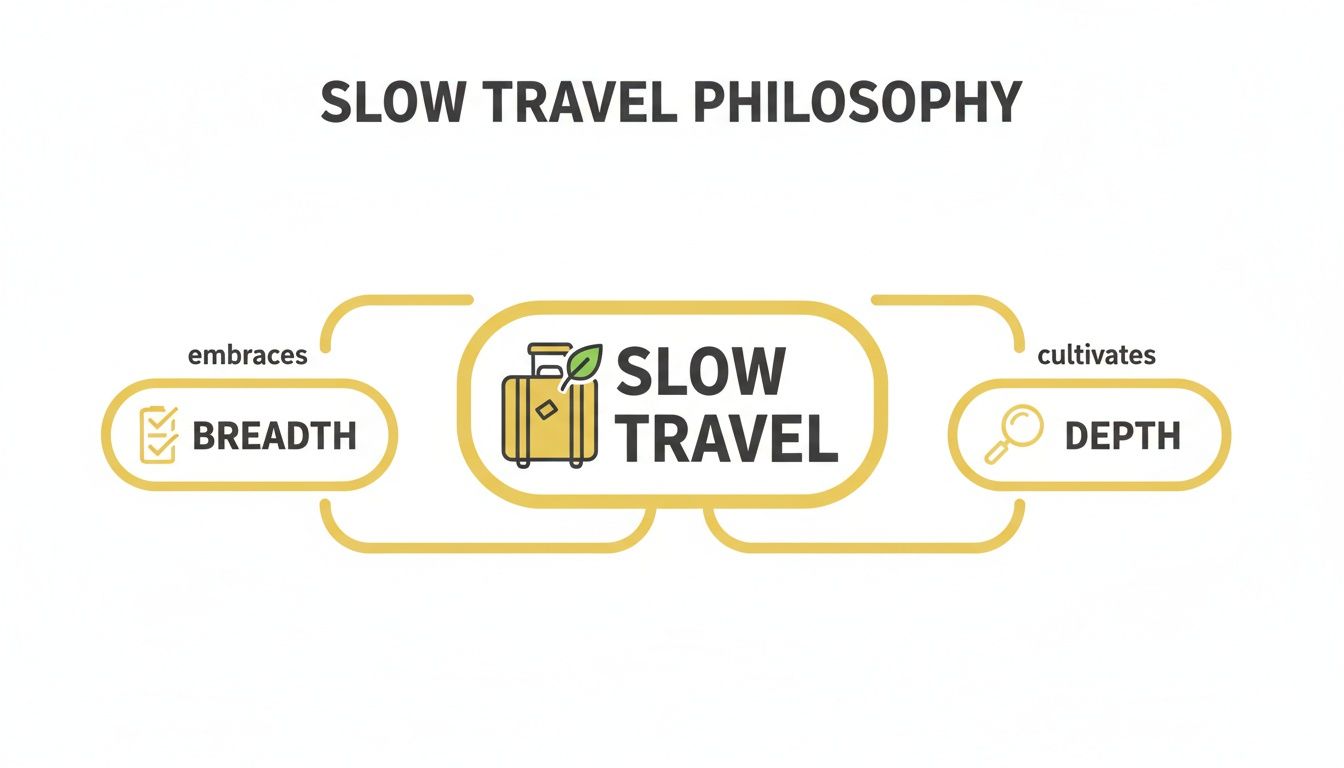
As you can see, it's not about ignoring the cool stuff a destination has to offer, but about cultivating a more meaningful interaction with it.
Deep Local Immersion
This leads right into the next pillar: deep local immersion. The goal here is to become a temporary resident, not just a fleeting visitor. This means stepping off the beaten path and into the rhythm of local life, because that's where you find the real character of a place.
Instead of only eating at tourist-focused restaurants, you find that small, family-run trattoria tucked away on a side street. You shop at the same neighborhood markets where locals buy their produce, learning what’s in season and how people interact with each other. This is the path to a full cultural experience.
A slow traveler’s goal is to understand the why behind a place, not just the what. Why do shops close in the afternoon? Why is a certain dish a regional specialty? This curiosity is the engine of deep immersion.
This approach means you're not just observing a place; you're participating in it. You might take public transportation, stumble into a local community event, or simply find a favorite café and return each morning. These small acts of participation weave you into the fabric of the community, creating an authentic and respectful immersive experience.
Embracing Spontaneity And Serendipity
A huge part of the slow travel mindset is leaving room for the unexpected. While planning is still important, a slow travel itinerary is intentionally flexible, with plenty of unscheduled time built right in. This is where the magic happens—it creates space for spontaneity and serendipity.
Honestly, these unplanned moments are often the most memorable parts of any trip.
- An unexpected invitation: A friendly chat with a local could easily lead to an invitation for a home-cooked meal.
- A hidden gem: An unplanned detour down a quiet alley might reveal a beautiful courtyard or a unique artisan shop you'd never find in a guidebook.
- A local festival: You might stumble upon a neighborhood celebration that isn't advertised to tourists at all.
By not over-scheduling your days, you give yourself the freedom to follow your curiosity. You can linger longer at a place that captivates you or change your plans entirely based on a recommendation from someone you meet. This flexibility is what gets you outside of the main touristic places and into experiences that feel truly personal and unique.
How To Find The Authentic Heart Of A Destination
Getting off the beaten path is where the real magic happens. This is how you find the living, breathing culture of a place—the one that exists far from the selfie sticks and long queues. It all comes down to a series of small, intentional choices that shift you from being a spectator to an actual participant in the life of a new city.
The secret isn’t about discovering some mythical, untouched village. It’s about changing your entire mindset. It means picking one neighborhood to be your home base and actually living there, even if it’s just for a week. This is the practical side of what is slow travel—turning ideas into actions that lead to a truly rich and immersive experience.
Become A Temporary Local
First things first: set up your home base in a real, residential neighborhood, well away from the main touristic places. Think about where people actually live, work, and run their errands. Just this simple shift in geography completely changes your perspective and daily encounters.
Suddenly, your daily routine becomes a source of discovery. You start recognizing faces at the local market, you get a feel for the rhythm of the neighborhood, and a genuine sense of belonging starts to creep in. The mission is to integrate, not just to visit.
The most unforgettable travel moments almost always happen in between the big sights. Figuring out which corner bakery has the best bread or mastering the local bus route can feel more rewarding than ticking another famous landmark off your list.
This whole approach is fueled by curiosity. Instead of asking, "What are the top 10 things to see?" start asking, "How do people actually live here?" The answers will point you toward far more interesting, off-the-beaten-path places than any guidebook ever could.
Master The Art Of Observation
Once you’re settled in, your next move is simple: just pay attention. Slowing down gives you the space to notice the little details of everyday life that most tourists zoom right past. Find a bench in a local square and just watch the world go by for an afternoon.
You’ll start to see things you never would have otherwise—how neighbors greet each other, when the local shops have their busiest rush, or what games the kids play after school. This is the raw material of a full cultural experience. These tiny, seemingly unimportant details are what give a place its unique character. This kind of deep engagement is at the core of intentional travel, and you can find more strategies in our guide to cultural immersion travel.
To get started, try a few of these simple activities:
- Visit a Local Library or Community Center: Check the bulletin boards for flyers about local events, classes, or clubs. It’s a direct window into what the community actually cares about.
- Ride Public Transit with No Destination: Just hop on a local bus or tram and ride it to the end of the line and back. You’ll see parts of the city that are completely off the tourist map.
- Shop at a Neighborhood Grocery Store: See what people are actually buying for their weeknight dinners. It's a surprisingly fascinating lesson in local cuisine and culture.
Follow The Local Guides
The best travel advice rarely comes from an online review—it comes from the people who live there. So, start talking to them. Strike up conversations with shopkeepers, baristas, or the person sitting next to you at a cafe. Ask simple questions like, "Where do you go for a good, no-fuss lunch around here?" or "What’s your favorite thing to do on a lazy Sunday?"
These conversations do more than just get you good recommendations; they build real connections. Most people are proud of where they live and are happy to share their favorite spots with someone who shows a genuine interest. This is how you find that tiny, family-run restaurant with no sign out front, the quiet viewpoint overlooking the city, or the weekly farmers market that isn’t advertised anywhere.
By prioritizing these small, authentic interactions, you step beyond the usual tourist transactions. You’re no longer just a consumer buying an experience; you’re a respectful guest, genuinely curious about the life of the place you’re visiting. And that is the true essence of finding a destination's heart.
Planning Your First Slow Travel Journey
Putting the philosophy of slow travel into practice starts long before you ever pack a bag. It’s less about a new planning technique and more about a complete shift in mindset—trading the frantic checklist of attractions for the deep satisfaction of truly knowing a single place.
This is where you stop asking, "How many cities can I cram into 10 days?" and start wondering, "How can I really get to know the rhythm of life here?" That simple change in perspective is the first real step toward an immersive experience that leaves you feeling restored, not like you need a vacation from your vacation.
Choosing Your Destination And Pace
The first big decision is finding a destination that actually suits a slower tempo. Forget thinking in terms of entire countries. Instead, zoom in on a specific region, a city, or even just one dynamic, off-the-beaten-path neighborhood. The whole point is to set up a home base that lets you explore without constantly being on the move.
For instance, instead of a whirlwind "France in a week" trip, you might spend that whole week in just the Saint-Germain-des-Prés neighborhood of Paris. This gives you time to find your favorite local bakery, discover the hidden courtyards locals use as shortcuts, and simply fall into a daily routine. You’re cutting down on transit time to maximize immersion time.
And this isn't some niche idea anymore; people are craving it. Recent data shows over 94 percent of Americans want to try slow travel. But here's the catch: the average American takes only 8 days of vacation a year, and just 11.3 percent plan trips longer than that, making a true slow journey a tough goal for many.
Rethinking Your Accommodation
Where you sleep is probably one of the most critical parts of a slow travel experience. Hotels are built for short-term visitors, often plopped right in the middle of touristic places. To get a real feel for a place, you need to stay where people actually live.
Options that put you right inside a living community are the way to go. Consider booking luxury vacation rentals or a locally-owned apartment in a residential area. It offers a completely different, more authentic perspective than a hotel ever could.
Choosing an apartment in a neighborhood lets you participate in the daily rhythm of life. You'll shop at the local market, navigate the public transport system, and become a temporary part of the community fabric rather than just an observer.
This decision does more than just give you a better experience—it directly supports the local economy. Plus, having a kitchen means you can try your hand at cooking with fresh ingredients you picked up from the corner market, which is an incredible immersive experience in itself.
Building An Itinerary With Empty Space
Here’s the biggest mental hurdle for most planners: learning to love unscheduled time. A slow travel itinerary shouldn't be a rigid, hour-by-hour schedule. Think of it more as a loose framework with huge gaps for spontaneity. That "empty space" is where the magic happens. It’s where you’ll stumble upon the best, most unexpected discoveries off the beaten path.
To help you get started, we've put together a quick checklist comparing the old way of planning with the slow travel approach.
Slow Travel Planning Checklist
This simple table highlights the key mindset shifts needed to move from a conventional, fast-paced trip to a more meaningful, slow travel journey.
| Planning Stage | Traditional Approach | Slow Travel Approach |
|---|---|---|
| Destination | Pick a country or multiple cities. | Choose one city or a specific region. |
| Pacing | Maximize sights per day. | Settle into one "home base." |
| Accommodation | Hotel in a central tourist district. | Apartment or guesthouse in a local neighborhood. |
| Itinerary | A detailed, hour-by-hour schedule. | A flexible framework with plenty of empty space. |
| Activities | Focus on major tourist attractions. | Prioritize off-the-beaten-path and local experiences. |
| Mindset | "Seeing" as much as possible. | "Experiencing" and connecting for a full cultural experience. |
Instead of a day-by-day list of museums and monuments, try this instead:
- Pick a Few Priorities: Identify just two or three "must-do" experiences for the whole trip.
- Research Neighborhood Vibes: Learn about the character of different areas. Where are the best local cafes? Where do artists hang out?
- Plan Around Daily Rituals: Build your days around simple things, like a morning walk to a specific park or an afternoon coffee at a local spot.
- Leave Days Wide Open: Intentionally leave at least a third of your days completely unplanned. This is your time to follow your curiosity or act on a recommendation from a local you just met.
This method transforms your plan from a restrictive to-do list into a genuine guide for exploration. It gives you a sense of direction without killing the freedom that makes slow travel so rewarding.
A Day In The Life Slow Travel In Action
The whole idea of slow travel sounds nice, but what does it actually look like when you're on the ground? It’s less about some grand, complicated itinerary and more about the small, deliberate choices you make all day long. Let’s make this concrete and walk through a day of slow travel to see how it really unfolds.
Think of these less as rigid schedules and more as stories. They show how a day freed from a frantic checklist can become something profoundly rich. It's about choosing the local rhythm over the tourist rush, which leads to a much deeper, more immersive experience, packed with the kind of real discoveries that define what is slow travel.
A Slow Morning In Trastevere Rome
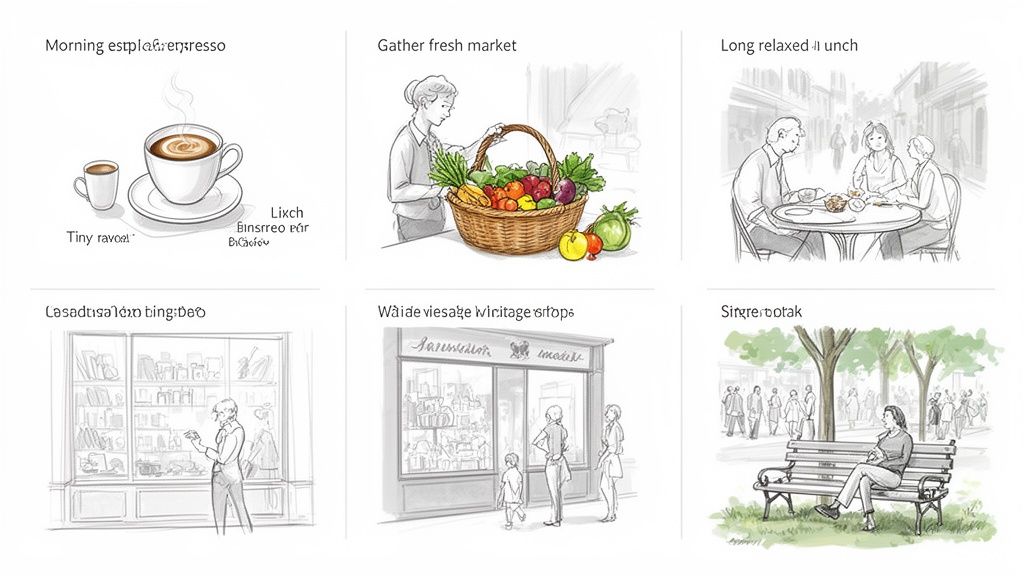
Picture this: you wake up in a small apartment in Rome's Trastevere neighborhood, a place known for its local character. No alarm is blaring, and there’s no tour bus to catch. The day starts with a short walk to the local bar—not a tourist trap, but the one on the corner where neighbors call out to each other by name. You order a cappuccino and a cornetto and stand at the counter, just like the locals, absorbing the musical cadence of Italian conversation all around you.
Next up, with a little caffeine in your system, you head to the Piazza San Cosimato market. You're not just here to snap photos; you have a mission: gathering supplies for lunch. You talk with the vendors, relying on local guides like them to recommend which tomatoes are ripest and buying Pecorino from a man who’s been selling it for 30 years.
This simple act of shopping for a meal plugs you into the local food chain and daily life in a way a restaurant meal never could. You're not just a consumer; you're participating in the neighborhood's ecosystem.
Back at your apartment, you put together a simple lunch with your market finds. The meal isn’t rushed. It’s an experience you savor on a tiny balcony overlooking the terracotta rooftops. The afternoon is a blank slate—maybe a nap, a lazy stroll along the Tiber, or getting lost in the ivy-covered alleyways with no destination in mind. This is a full cultural experience.
An Afternoon Exploring Shimokitazawa Tokyo
Now, let's jump to Tokyo, but miles away from the chaos of Shibuya Crossing. You’ve decided to spend the day in Shimokitazawa, a bohemian neighborhood known for its vintage shops, indie theaters, and a distinctly laid-back vibe. Your only goal for the afternoon is to wander off the beaten path and see what you find.
You start by exploring the maze of narrow streets, ducking into curated thrift stores filled with one-of-a-kind clothes and retro gems. There's no shopping list. You just follow your curiosity, letting one interesting storefront lead you to the next.
Later, you grab a coffee from a tiny, third-wave roaster and find a bench in a small local park, far outside the main touristic places. You spend the next hour just watching. You see the incredible street style the area is famous for, notice how friends greet each other, and feel the creative, youthful energy that defines the neighborhood. This is a total immersive experience into a subculture, something you'll never get from a guidebook.
This afternoon shows a few key slow travel principles in action:
- Going Off the Beaten Path: Choosing a neighborhood known for its local character over a major tourist hub.
- Embracing Spontaneity: Allowing yourself to wander without a fixed plan, which leads to personal discoveries.
- Deep Observation: Taking time to just sit and absorb the atmosphere, which gives you a much deeper understanding of the local culture.
These two "micro-itineraries" prove that slow travel isn't about doing nothing. It’s about doing things with intention and presence, finding richness in the ordinary, and building a real connection with the places you visit, one unhurried day at a time.
Becoming A More Conscious And Respectful Visitor
Going slow is about more than just your personal travel style; it's a commitment. At its heart, slow travel is a direct line to becoming a more thoughtful and responsible visitor, turning your trip into something that genuinely benefits the places you see. It’s about shifting the focus from "what can I get?" to "what can I contribute?"
When you aren’t rushing, you give yourself the mental space to actually see and understand local norms. This is where real respect begins. It’s the small, unspoken rules of daily life—often found off the beaten path—that fast-paced tourism usually steamrolls right over.
Respecting Local Rhythms And Customs
Every place moves to its own beat. Taking the time to learn that rhythm is what separates a respectful traveler from a disruptive one. For example, knowing that cash is still king in much of Germany saves you from an awkward moment at a cafe. Or understanding Japan's strict escalator etiquette—stand on the left in Tokyo, but on the right in Osaka—shows you’re actually paying attention.
These details might seem tiny, but they show you're making a genuine effort to fit in, rather than expecting an entire culture to bend to your habits. You're a guest in their home, after all.
Being a conscious visitor means your presence adds value to the community rather than just taking from it. By slowing down, you invest your time and resources more thoughtfully, ensuring your visit is a mutually beneficial exchange.
This mindset naturally leads to a more positive footprint. You have the time to engage with the community in ways that are both meaningful and sustainable. For anyone looking to go deeper, our guide on sustainable travel tips is a great place to start.
Making A Positive Local Impact
Slow travel completely changes where your money goes. Instead of funneling cash to massive international hotel chains and big-bus tour operators, your money ends up in the hands of the people who actually make a place special. This happens almost automatically when you prioritize local guides and businesses:
- Supporting Small Businesses: Choosing that family-run guesthouse, eating at the neighborhood trattoria, or buying a souvenir from a local artisan means your money directly supports the local economy.
- Minimizing Environmental Strain: By staying put longer, you drastically slash your carbon emissions from transportation. You end up walking more, using public transit, and contributing far less to the pollution that comes with constant movement.
- Engaging Respectfully: You have more chances for genuine, unhurried chats with people. These are the interactions that build real understanding and mutual respect between visitors and residents.
Ultimately, this approach changes the whole point of the trip. You start to see your journey not just as a better way to vacation, but as a more ethical and sustainable way to explore the world—leaving a place just as good, or maybe even a little better, than you found it.
Still Have Questions About Slow Travel?
Lots of travelers love the idea of slow travel, but the practical side of things can feel a little fuzzy. Let's clear up some of the most common questions that might be holding you back from planning a truly immersive trip.
The biggest myth is that slow travel is only for people with endless vacation time and deep pockets. But really, it's a mindset, not a strict timeline. You can absolutely embrace slow travel principles on a shorter trip just by choosing to explore one single neighborhood deeply instead of trying to cram a whole country into a week.
This "less is more" approach often ends up being friendlier on the wallet, too. When you stay put in one place outside of main touristic places, you slash all those expensive train, plane, and bus tickets between cities. Renting an apartment with a kitchen also means you can shop at local markets and cook your own meals—a full cultural experience in itself that also happens to save a ton of money.
But What About...?
It's totally normal to have concerns about safety and logistics when you're stepping off the beaten path. Here are a few quick answers to the worries we hear most often.
- Is it safe to stay in local neighborhoods? Honestly, residential areas are often safer than the tourist hotspots. Once you become a familiar face at the local bakery or corner store, you start to build a real sense of community. Neighbors look out for each other.
- What if I don't speak the language? A little effort goes a very long way. Learning just a few words like "hello," "please," and "thank you" shows respect and opens up conversations. For everything else, translation apps work wonders.
- How do I find authentic experiences? Just talk to people and follow local guides. It’s that simple. Ask the woman who runs the local bakery for her favorite lunch spot, or the owner of a small bookshop where to find a quiet park. These little interactions are your best guide to the real, non-touristy side of a place.
Ready to stop just seeing the world and start actually connecting with it? The local guides at CoraTravels give you the on-the-ground context you need to travel more thoughtfully and respectfully. Explore our guides and travel like a local.