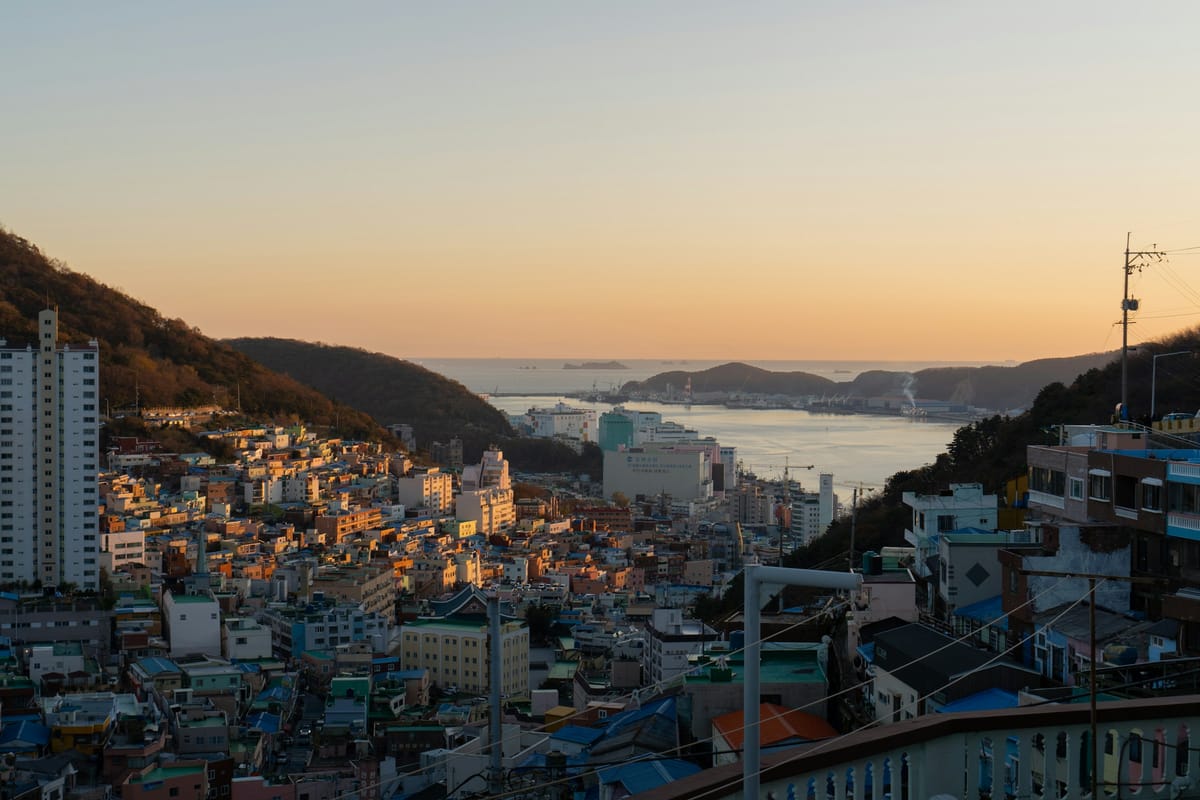
🇰🇷 South Korea
South Korea Travel Guide - Where Nunchi Meets Ppalli-Ppalli
5 destinations · Budget level 3
Overview
South Korea is a country of productive contradictions: ancient Confucian hierarchies running on 5G networks, Buddhist temple stays beside twenty-four-hour fried chicken chains, and people who will refuse to let you pay for dinner — then sprint past you on the subway escalator because standing still feels physically wrong. Korean identity was forged through centuries of invasions, Japanese colonial occupation (1910–1945), a devastating civil war that split the peninsula, and then one of history's most extraordinary economic transformations — from war rubble to twelfth-largest economy in roughly fifty years. That history lives in the culture as 'han' (한), an untranslatable collective melancholy — the weight of accumulated grief, injustice, and perseverance — that surfaces in the mournful pull of pansori folk music, the bittersweet humor of locals, and a national resilience that borders on stubbornness. Counterbalancing han is 'jeong' (정), the deep emotional glue that binds Koreans together — a warmth that develops slowly but, once formed, means strangers become family who worry about whether you've eaten today. Social life is steered by 'nunchi' (눈치), an almost psychic ability to read the room and sense others' feelings without words — someone with poor nunchi ('nunchi eoptta') is gently pitied as socially oblivious. Running beneath all of this is Confucian hierarchy: age determines speech levels, pouring order at dinner tables, and who holds the door. Korea's unique spoken language has multiple formality registers, so knowing someone's age isn't small talk — it's essential infrastructure. This is a country where the old and new don't just coexist, they actively compete, and that tension makes it endlessly fascinating.
Travel tips
Two-Hand Protocol: Give and receive everything — business cards, drinks, gifts, change — with both hands or with one hand supported by the other at the forearm. Handing something with one hand to an elder reads as dismissive. Bowing Basics: Small nod (15°) for casual greetings, deeper bow (30-45°) for elders and formal situations — depth signals respect. Don't overthink it; locals are forgiving with foreigners, but the effort is always noticed. Shoe Removal: Remove shoes entering homes, many traditional restaurants (jjimjilbang bathhouses, templestay accommodation, some hanok guesthouses), and certain fitting rooms. Look for a step-up threshold or a shoe rack — those are your cues. Drinking Hierarchy: Never pour your own drink; let others pour for you and do the same for them. When an elder pours for you, use both hands to hold the glass. Outright refusing a drink from a senior can genuinely offend — accepting with a small sip maintains kibun (mood harmony). Age Question: Being asked your age within minutes of meeting someone is not rude — it's linguistic necessity. Koreans need to know whether to speak to you in formal or informal Korean. Answer comfortably, or just say you're happy to be spoken to in whatever register feels natural. Public Noise Norms: Koreans are quiet on subways — phone calls are done at a murmur, music stays in earphones, eating on trains is technically discouraged. Adjust expectations coming from louder cultures. Pointing Fingers: Use an open hand or gesture with your whole arm to indicate direction; pointing with a single index finger at people reads as aggressive. Tipping Culture: Don't tip. Not in restaurants, not in taxis, not in hotels. It can confuse or mildly embarrass service staff. Excellent service is simply expected — it's a point of professional pride.
Cultural insights
Understanding Korea requires sitting with five interlocking concepts that locals navigate daily without naming them. 'Nunchi' (눈치) is the one most visitors notice first — a hyperawareness of social atmosphere that makes Koreans exceptional at reading what you need before you ask. Someone with strong nunchi senses tension, adjusts their behavior, and smooths awkwardness before it surfaces. In a culture where direct refusal is avoided (saying 'no' bluntly violates kibun), nunchi is how you understand that 'we'll see' means no, and 'it might be difficult' means absolutely not. 'Kibun' (기분) — roughly mood or feeling — determines the atmosphere of every social interaction. Preserving kibun means not embarrassing someone publicly, not delivering bad news abruptly, and not pushing for a direct answer when the other person is clearly uncomfortable. Foreigners who treat kibun-preserving as dishonesty miss the point: it's collective emotional maintenance. 'Chaemyeon' (체면) — face — shapes professional life dramatically. A manager won't admit ignorance in front of subordinates; employees won't contradict bosses publicly even when the boss is wrong; students won't ask the question that reveals they haven't understood. This creates communication patterns that can frustrate outsiders but reflect a deep respect for dignity in every context. 'Jeong' (정) is the relationship glue that accumulates slowly — you feel it when the older woman at the pojangmacha starts saving your usual spot, when a new Korean acquaintance texts to make sure you got home safely, when strangers at a shared table start offering you food without asking. It can't be forced, but once it forms it's remarkably durable. And then there's 'han' (한) — the collective wound of historical suffering, occupation, war, and division. Han isn't depression or victimhood; it's a kind of proud grief that became creative fuel. It drives the intensity of Korean cinema, the emotional rawness of ballads, and the midnight-oil work ethic that says 'we survived worse.' The Confucian framework tying all of this together means that Korea is a profoundly age-conscious society in a way that surpasses even neighboring Japan. The Korean age system traditionally added a year at birth and another at each New Year (though legal reforms in 2023 moved official contexts to the international system), and the question 'How old are you?' is structural, not personal. Language has six speech levels — from flat banmal used with close friends to formal-polite speech for elders and strangers. Using the wrong level isn't merely awkward; it signals that you see someone as below you. Regional identity also runs deeper than outsiders expect — Seoul urbanites have a certain reputation for formality and ambition; Busan southerners are considered warmer and more blunt; Jeju islanders (with their distinct dialect, Jejueo, recognized by UNESCO as a critically endangered language) carry a separate island identity shaped by isolation and the haenyeo diving tradition. The 'ppalli-ppalli' (빨리빨리) mindset — hurry-hurry — isn't mere impatience. It's a national philosophy born from post-war reconstruction urgency: things should happen now, efficiency is virtue, and wasting time is almost morally suspect. South Korea's internet is the fastest in the world. Delivery apps fulfill orders in thirty minutes. Elevators close at the first tap of the button. Once you understand ppalli-ppalli as a survival strategy turned cultural identity, everything from same-day shipping to aggressive driving starts making sense.
Best time to visit
Spring (March–May): The most celebrated season, with cherry blossoms arriving in Jeju and Busan in late March before moving north to Seoul by early April — peak bloom lasts roughly one week, so timing matters. Temperatures climb from 6°C in March to 17°C in May, and the Jinhae Gunhangje Cherry Blossom Festival draws enormous crowds to the military port town near Changwon. Yellow dust (hwangsa) blowing in from Chinese deserts peaks in April; check air quality apps daily and consider an N95 mask on high-dust days. Crowds and prices spike during spring peak — book accommodation weeks ahead. Summer (June–August): Hot and intensely humid, with Seoul regularly hitting 33°C+. The monsoon (jangma) season arrives mid-June, bringing weeks of heavy rain, then stepping back in late July before late-summer typhoon risk. Locals escape to mountains, coastlines, and Jeju beaches. Budget travelers find off-peak hotel rates outside school holidays (late July–August). The Boryeong Mud Festival (July) is hugely popular with foreign tourists. Summer is also when nightlife and beach culture peak in Busan. Autumn (September–November): Arguably the finest season. Crisp, clear air replaces monsoon humidity; temperatures settle between 8-23°C; mountain foliage turns copper and crimson from mid-October. The Jinju Namgang Lantern Festival (October) — thousands of lanterns floating down the Namgang River — is one of Korea's most beautiful cultural events. Chuseok (harvest thanksgiving) shuts much of the country down for several days as everyone travels to ancestral hometowns; book everything before or after, not during. Winter (December–February): Seoul turns cold and dry (-10°C to 5°C), but the air is clear and cities sparkle with elaborate Christmas and New Year displays. Ski resorts like Vivaldi Park and Yongpyong (used during the 2018 PyeongChang Olympics) are excellent and affordable. Jjimjilbang (traditional bathhouses) and hot tteokbokki at pojangmacha tents become peak experiences. Far fewer tourists; locals spend New Year and Seollal (Lunar New Year) with family. Jeju stays relatively mild year-round (5-15°C in winter), making it a warm-weather refuge.
Getting around
T-Money Card: Buy one at any convenience store (CU, GS25, 7-Eleven) for ₩2,500-4,000 and load credit at the machine — it covers subways, city buses, intercity buses, and taxis across the entire country. Touching in and out saves around 10% versus cash fares. Apple Pay users can now tap directly on Seoul Metro gates (since April 2026). Seoul Metro: Twenty-three lines covering central Seoul, Incheon, and surrounding Gyeonggi Province, running 5:30 AM to midnight. Signage is bilingual (Korean/English), platform screen doors show arrival times in real time, and free transfer windows exist between connecting lines — a single card tap handles it all. Avoid 7–9 AM and 6–8 PM unless you enjoy compulsory physical contact. KTX High-Speed Rail: Seoul to Busan in 2 hours 15 minutes (₩59,800 standard), Seoul to Gyeongju in around 2 hours, Seoul to Gwangju in 1 hour 40 minutes. Book at Korail website or Korail app; seats sell out on holiday weekends. SRT (separate high-speed service from Suseo station) is slightly cheaper on the Busan and Mokpo corridors. Intercity Express Buses: The gosok bus terminal network covers everywhere KTX doesn't — often cheaper than trains for routes like Seoul to Jeonju (₩6,000-9,000) and comfortable enough for trips under three hours. Terminal apps like Kobus let you book in advance. City Buses: Color-coded in Seoul — blue for main arterial routes, green for local feeders, red for express to satellite cities, yellow for inner-city circular. Intimidating at first, reliable once mapped. Taxis and Ride-Hailing: Kakao Taxi is the universal app, covers most cities, English interface available. Base fare in Seoul is ₩4,800 (₩6,000 on premium black cabs). Late-night surcharges apply midnight–4 AM. Always ensure the meter starts; most drivers are honest, but nightlife-district tourists occasionally get flat-rate quotes — decline and use the app. Renting a Car: Only makes sense outside Seoul — the city's parking costs and congestion defeat the purpose. For Jeju Island, Gyeongju's temple trails, or the scenic south coast, a rental (₩30,000-60,000/day) is the best option. International license required.
Budget guidance
Budget Travel (₩50,000-80,000/day ~€35-55): Hostel dormitory ₩15,000-30,000, goshiwon (micro-room) ₩400,000-500,000/month if staying long-term. Street food and kimbap shops deliver filling meals for ₩3,000-8,000 — a tray of tteokbokki (spicy rice cakes) runs ₩3,000-5,000, kimchi jjigae (stew) ₩7,000-9,000, gimbap rolls ₩3,000-4,000. Seoul subway fares ₩1,350-2,500 per journey. Palace entrance ₩3,000. Budget travelers who eat at lunch specials (jungsik) and visit free attractions can live well on this. Mid-Range (₩100,000-200,000/day ~€70-140): Budget hotel or well-located Airbnb ₩60,000-100,000, sit-down restaurant meals ₩12,000-25,000, Korean barbecue with friends ₩15,000-25,000/person, KTX day trips, museum entries ₩4,000-12,000. This is the comfortable local lifestyle — hanwoo beef occasionally, noraebang (karaoke room) sessions, craft beer bars, a city bus tour. Luxury (₩200,000+/day ~€140+): Boutique hanok stays ₩150,000-400,000/night, premium hanwoo beef courses ₩80,000-200,000/person, private driver or taxi for day trips, spa treatments at luxury jjimjilbang. Seoul is significantly pricier than regional cities — the same budget stretches roughly 30% further in Jeonju, Gyeongju, or Busan. Convenience store (GS25, CU) meals deserve a mention: a triangle kimbap ₩1,200, instant ramen ₩1,500, ready-made bento ₩3,500-5,000 — Koreans eat these unselfconsciously and travelers should too.
Language
Korean (한국어, Hangul script) is spoken by essentially all 52 million South Koreans. Hangul — the phonetic alphabet invented in 1443 by King Sejong — is elegantly logical and can be learned to reading level in a few days; being able to sound out restaurant signs and subway stations makes an enormous practical difference. The language's honorific system has six levels: banmal (casual/informal, used with close friends and those much younger) through formal polite (haeyoche, haeyoseoche) to the highest formal speech used in broadcasting and official contexts. Getting the level wrong in either direction — too casual with an elder or too formal with a friend — creates social friction. Essential phrases: 'Annyeonghaseyo' (안녕하세요 — formal hello), 'Gamsahamnida' (감사합니다 — thank you, formal), 'Mianhamnida' (미안합니다 — I'm sorry, formal), 'Juseyo' (주세요 — please give me / I'd like), 'Igeo eolmayeyo?' (이거 얼마예요? — How much is this?), 'Hwajangsil eodi isseoyo?' (화장실 어디 있어요? — Where is the bathroom?). English is taught from elementary school and widely spoken in Seoul's tourist and business districts, but drops off significantly in smaller cities and rural areas. Papago (Naver's translation app, free) is vastly more accurate than Google Translate for Korean, especially for menus and street signs — download it offline before arriving. Locals react with visible delight when foreigners attempt even a single Korean phrase; the attempt alone changes how you're treated.
Safety
South Korea is among the safest countries in the world for travelers — violent crime against tourists is genuinely rare, and locals routinely leave laptops on café tables and bags on subway seats as placeholder. The threats that do exist are specific: 'Cult recruitment' is the most common nuisance in tourist-heavy areas like Hongdae, Insadong, and Myeongdong — a very friendly young person asks for directions or a 'cultural survey' and escalates toward inviting you to a 'traditional ceremony' or 'language exchange.' These are often fronts for high-demand religious groups (most frequently Shincheonji). Decline politely and walk away. Taxi overcharging in nightlife districts late at night exists but is deterred by using Kakao Taxi (metered, in-app record) rather than hailing random cabs. Overpriced drink menus at hostess bars exist around Itaewon and some Hongdae side streets — if a place feels pressure-y about ordering, leave. North Korea: the political situation remains tense but has zero practical impact on visiting South Korea. The DMZ (Demilitarized Zone) is an extremely popular, fully safe day trip from Seoul. Natural hazards: typhoon season runs July-September and can disrupt coastal travel; yellow dust season (March-April) worsens air quality dramatically — check apps like IQAir or AirKorea. Icy sidewalks in winter (January-February) cause genuine injuries; walking carefully matters. Emergency numbers: 112 (police), 119 (fire and ambulance), 1330 (dedicated 24/7 English-language tourist helpline, available by phone or chat). Healthcare is excellent and reasonably priced by international standards; travel insurance is worth having but a clinic visit for routine illness typically costs ₩10,000-30,000 before insurance. Tap water is safe to drink in all cities.
Money & payments
Korean Won (₩/KRW) is the currency. Notes come in ₩50,000, ₩10,000, ₩5,000, ₩1,000; coins in ₩500, ₩100, ₩50, ₩10. South Korea is one of the world's most cashless societies — mobile payments via KakaoPay, Samsung Pay, and Naver Pay dominate, and cards are accepted nearly everywhere including street vendors in tourist markets. ATMs (look for Global ATM or Woori Bank machines) dispense cash reliably. Street food stalls, traditional markets (Gwangjang, Namdaemun), and pojangmacha tent bars often prefer cash. Typical costs: Americano coffee ₩3,500-5,500 (café culture is serious — Koreans consume more coffee per capita than almost any nation), bowl of bibimbap ₩8,000-12,000, Korean barbecue (per person, with sides) ₩15,000-30,000, bottle of soju ₩1,500-2,500 at a convenience store vs ₩4,000-7,000 at a restaurant, noraebang room rental ₩15,000-25,000/hour for the group, subway ride ₩1,350-2,500. Tipping is not practiced and can cause genuine discomfort — the price on the menu is what you pay, service quality is a matter of professional pride, not tip incentive. Currency exchange is straightforward at airport desks, Myeongdong street exchange bureaus (often better rates than banks), and major hotels.
Destinations in South Korea
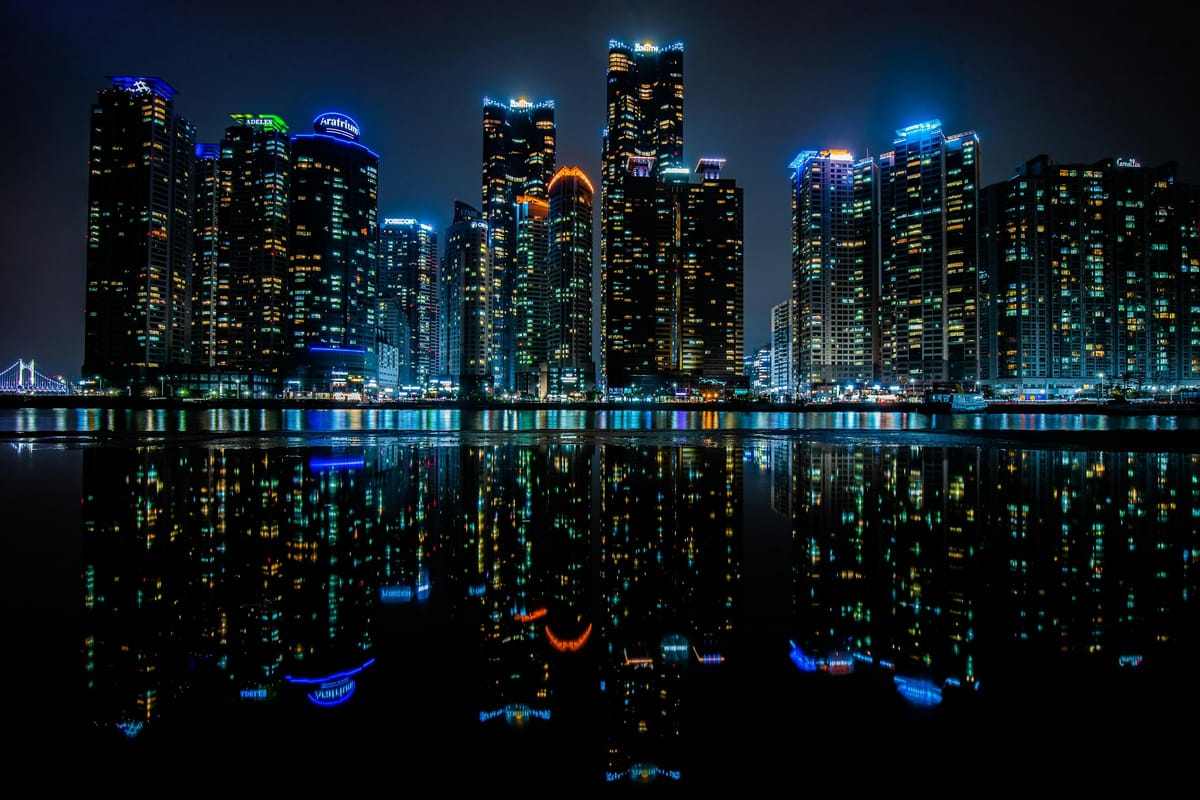
Busan, East Asia
Busan: Where Mountains Meet the Sea
Satoori, Not Standard Korean: Locals speak Gyeongsang-do dialect (satoori), which lands harder and faster than Seoul Korean - a simple "mwo ra kago?" (뭐라카노, …
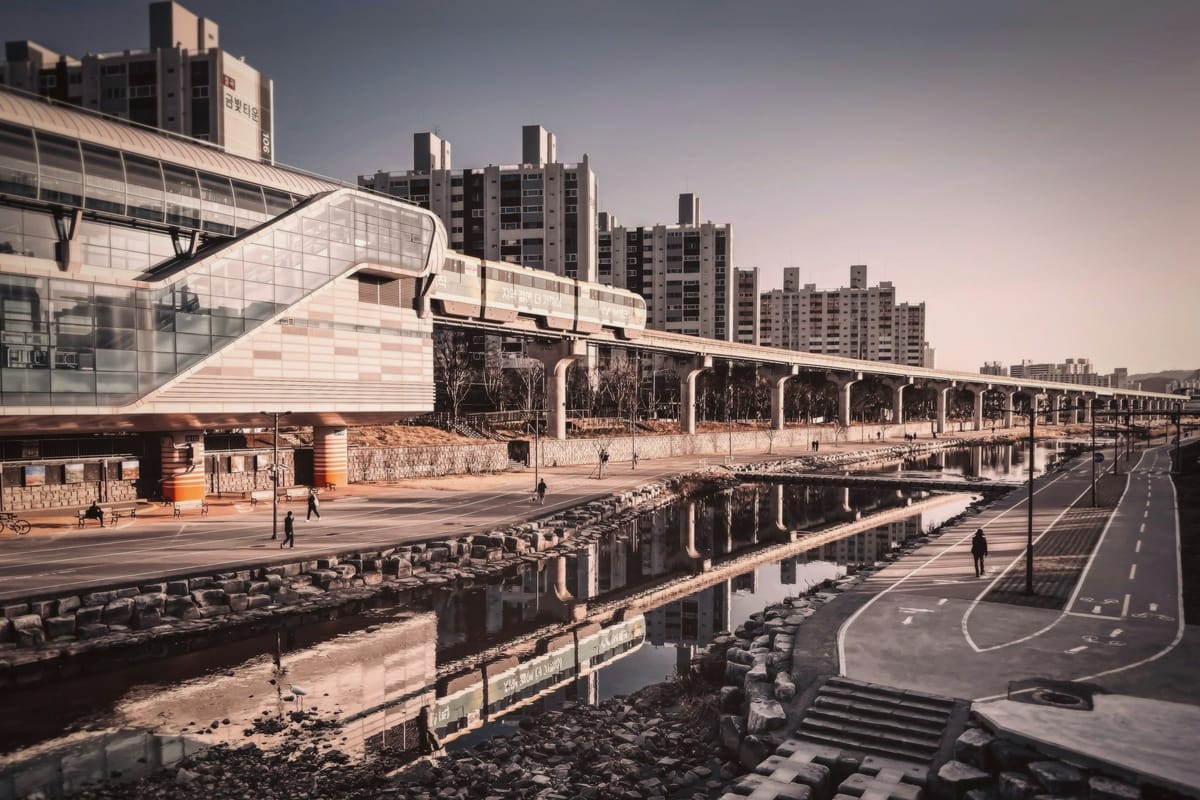
Daegu, East Asia
Daegu: Apple City, Daefrica Basin Soul
"Daefrica" Heat: Daegu sits at the bottom of a wide basin ringed by the Palgongsan and Biseulsan mountain ranges, which trap hot, still air with almost no br…
Daejeon, East Asia
Daejeon: Silicon Valley Hot Springs
Age-Based Hierarchy Obsession: Koreans will ask your age within five minutes of meeting you - not rude, just determining which honorific language to use. Loc…
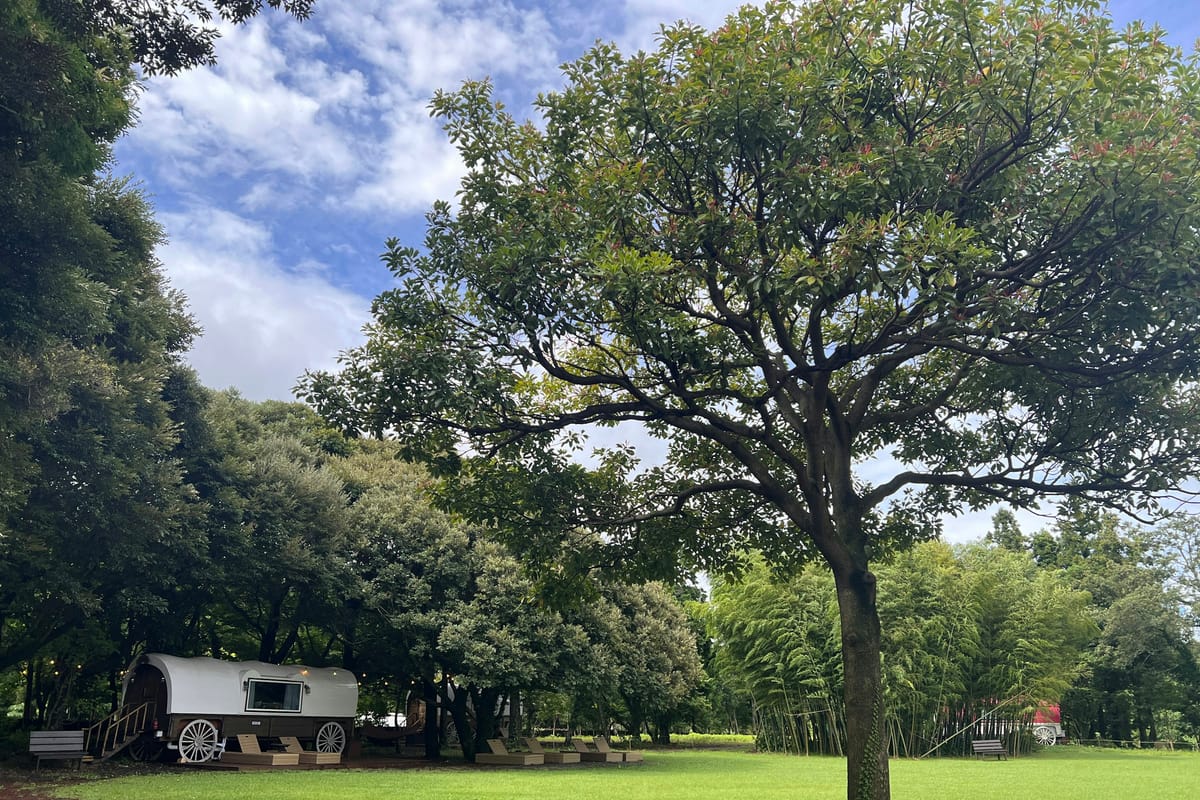
Jeju Island, East Asia
Jeju Island: Volcanic Shores, Sea Women & Black Pork Soul
Three Abundances (Samda 三多): Jeju's identity is built on three abundances - wind (바람/baram), rocks (돌/dol), and women (여자/yeoja) - and three historic absence…
Seoul, East Asia
Seoul: K-Culture Capital & 24/7 Energy
Ppalli-ppalli Culture: 'Hurry, hurry' mentality, locals do everything at breakneck speed. Age Hierarchy Sacred: Formal language changes based on age, locals …